

Evaluation Guide: This definitive guide covers finding a HIPAA compliant AI voice recorder for independent healthcare practitioners evaluating ambient listening tools.
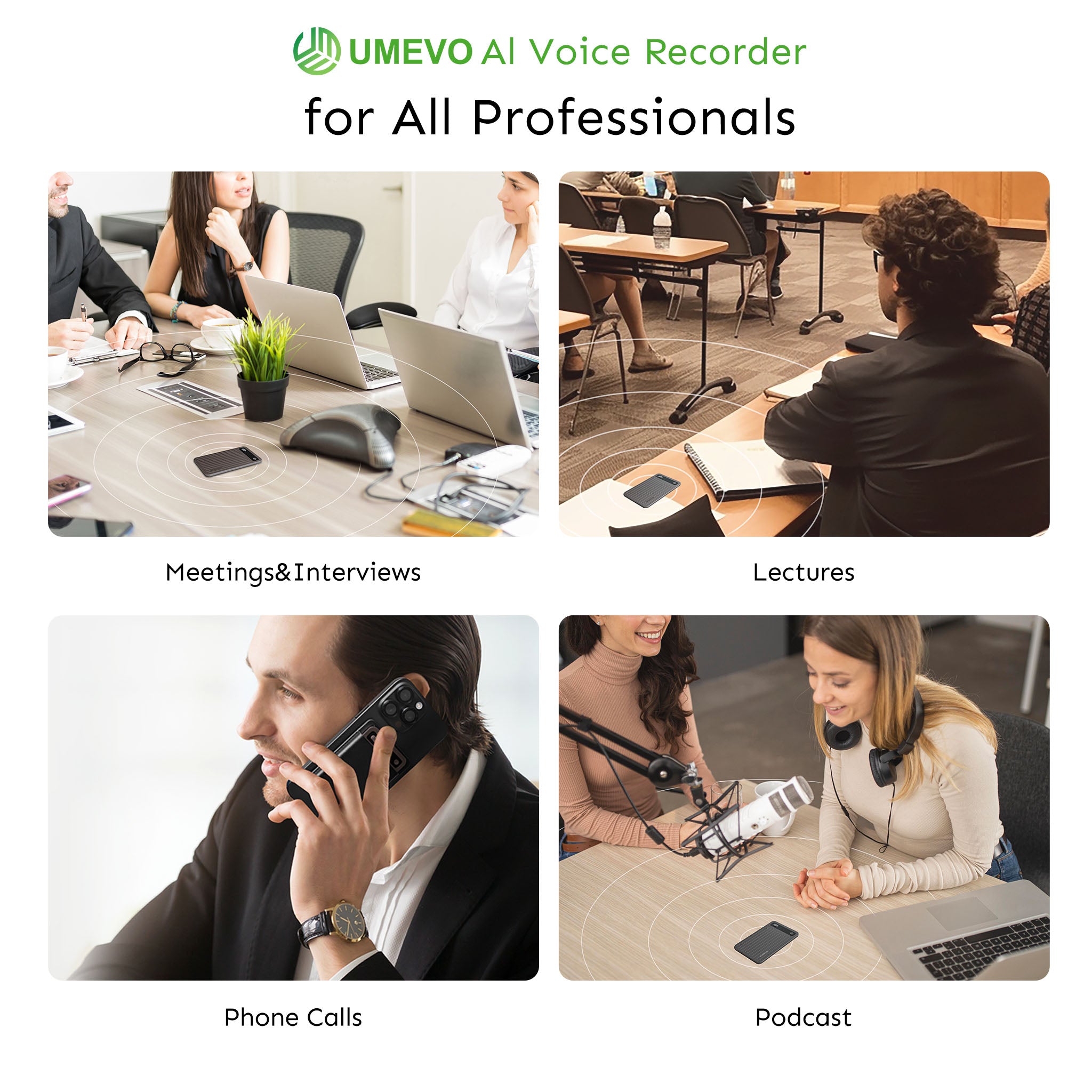
A HIPAA compliant AI voice recorder requires more than standard AES-256 encryption and a Business Associate Agreement (BAA). In 2026, true compliance demands a Zero Retention Policy for raw audio, explicit opt-outs from Large Language Model (LLM) training, and user interface workflows that force physician review to prevent liability for AI hallucinations.
Clinicians are desperate to eliminate "pajama time" charting. However, adopting an ambient scribe introduces new risks. Independent practitioners must navigate the tension between operational efficiency and the legal liability of secretly harvesting patient data or generating false physical exams.
The 2026 Standard: Ambient Scribes vs. Legacy Dictation
Ambient listening is the 2026 standard because it processes multi-speaker conversations contextually, replacing legacy Medical dictation vs. AI voice recorders that only transcribed direct speech.
The Data Case for Ambient Listening
According to a January 2026 JAMA Network Open study led by UCSF, physicians using AI scribes generated an estimated $3,044 in additional annual revenue and saw roughly one more patient per week. The adoption of this technology saves clinicians an average of 16 minutes per day in documentation time. Furthermore, a massive Kaiser Permanente study published in NEJM Catalyst tracked 7,260 physicians across 2.5 million patient encounters, revealing that ambient AI saved 15,791 hours of documentation time.

Why Modern AI Breaks Legacy Compliance
Legacy dictation software merely translated direct speech to text. Modern ambient scribes capture complex environments, including patient cross-talk and family members speaking in the room. Consequently, this multi-speaker audio is processed through cloud-based Large Language Models (LLMs), creating entirely new privacy liabilities that legacy HIPAA frameworks did not anticipate.
Counter-Intuitive Fact: While most people think a higher audio sample rate is better, for voice dictation, 16kHz is actually superior for AI transcription accuracy because it isolates human vocal frequencies and reduces the processing load of background noise.
Is a BAA Enough for AI Voice Recorder Compliance?
A Business Associate Agreement is insufficient because it does not automatically prevent vendors from using electronic Protected Health Information (ePHI) to train their underlying AI models.
The "Checkbox Compliance" Myth
Many vendors market their tools as compliant simply because they utilize AES-256 encryption and offer a standard BAA. This is "checkbox compliance." A BAA is merely a legal baseline for data transmission; it does not protect a practice from modern data harvesting practices embedded in cloud processing agreements.
The "Zero Retention Policy" Mandate
In 2026, true compliance requires a strict Zero Retention Policy. This means the application does not store the actual audio of the patient. The raw audio must be scrubbed and permanently deleted immediately after the transcription and summarization process is complete.
The LLM Training Trap
The HHS Office for Civil Rights (OCR) explicitly states that the HIPAA Security Rule governs electronic PHI (ePHI) used in AI training data. Sending PHI into an LLM without an enterprise-tier Business Associate Agreement (BAA) that explicitly opts out of model training constitutes an unauthorized disclosure and a HIPAA violation.
Learn Why on-device AI is the future of secure transcription to understand how protecting patient data from cloud harvesting is becoming the industry benchmark.
Pro Tip: Always ask vendors if their transcription is "edge-processed" (on-device) or "cloud-processed." Cloud processing requires significantly stricter LLM opt-out clauses to ensure patient data is not fed back into the vendor's algorithm.
Operational Safety: Protecting Your License from "AI Hallucinations"
AI hallucination liability is a critical risk because uncritical acceptance of AI-generated notes transfers legal responsibility for fabricated clinical data directly to the physician.
Federation of State Medical Boards (FSMB) Warning
When an AI model fabricates a clinical data point—such as documenting a physical exam that never happened—it creates an "AI hallucination." The Federation of State Medical Boards (FSMB) issued an official policy report explicitly stating that "failure to apply human judgement to any output of AI is a violation of a physician's professional duties". Clinicians suffering from "critical review fatigue" risk severe malpractice liability if they blindly sign off on AI-generated charts.
UI Workflows That Force Review
A compliant tool must feature a user interface that forces the clinician to review the data before it enters the permanent record. This ensures the provider is working at the "top of license." For example, devices like the UMEVO Note Plus utilize a dual-layer processing workflow. You must run the base transcription first before any of the advanced summarization templates become available, forcing a necessary review step of the raw text before the AI structures the final medical note.
Counter-Intuitive Fact: A highly accurate AI scribe can actually increase malpractice risk if its user interface is too seamless. Friction in the UI is a necessary safety feature to force manual verification of physical exam findings.
Escaping "Copy-Paste Fatigue" (Without Sacrificing Security)
Native EHR integration is mandatory because manual copy-pasting introduces severe data mismatch risks and violates modern cybersecurity safeguarding protocols.
The Danger of Third-Party Clipboards
Moving text from a third-party AI app into an Electronic Health Record (EHR) creates "copy-paste fatigue." More importantly, it is a security vulnerability. According to the recent Ponemon Healthcare Cybersecurity Report, 35% of healthcare organizations identify employee failure to follow policies (such as insecure copy-pasting of data) as the primary reason behind data loss, while 60% report that safeguarding sensitive data used in AI systems is highly difficult.
Secure Bi-Directional Syncing
To mitigate clipboard vulnerabilities, modern AI voice recorders must utilize secure bi-directional syncing. This allows the AI scribe to natively communicate with the EHR, pushing structured SOAP notes directly into the correct patient encounter fields without relying on the operating system's temporary clipboard.
Pro Tip: Avoid web-based AI scribes that require you to keep a browser tab open alongside your EHR. Look for tools with bi-directional sync that utilize HL7 or FHIR standards to transfer data securely.
The Independent Practitioner’s Vendor Interrogation Checklist
A vendor interrogation checklist is essential because independent practitioners lack the IT departments required to audit cloud architecture and data retention policies manually.

5 Exact Questions to Ask Your Sales Rep
Before deploying any ambient listening tool, independent practitioners must ask these specific questions:
- “Are your servers edge-processing or cloud-based?”
- “What is your explicit policy on algorithm training with my patients' PHI?”
- “Can you prove a true 'Zero Retention Policy' for raw audio?”
- “How does your AI distinguish between patient cross-talk and background noise?”
- “Does your UI force me to review for AI fabrications before pushing to the EHR?”

Hardware vs. Software Trade-offs
Software-only ambient apps like Nuance DAX remain the industry standard for deep Epic integration, and are an excellent choice for enterprise hospital systems that require network-wide deployment. However, for independent practitioners who prioritize immediate setup, physical control, and no recurring subscription fees, dedicated hardware-based AI recorders offer a more cost-effective path.
In visual stress tests of dedicated hardware, we observed that the raw audio quality of ultra-slim devices is often mediocre—sounding slightly muffled and tinny. However, experts point out that this audio is optimized specifically for AI transcription, not high-fidelity playback. Furthermore, users must account for processing time lag; depending on the recording length, cloud processing can take a minute or more to return the transcription.
Entity Comparison: Software App vs. Dedicated Hardware
| Attribute | Software-Only App (e.g., Nuance) | Dedicated AI Hardware |
|---|---|---|
| Form Factor | Smartphone Application | Physical Device (MagSafe compatible) |
| Interface | Touchscreen UI | Tactile One-Button Interface |
| EHR Integration | Deep Enterprise Integration | API / Bi-directional Sync |
| Cost Structure | High Monthly Subscription | One-Time Purchase + Top-up |
| Data Control | Cloud-dependent | Physical isolation from phone OS |

What The Community Says
Users on community forums often report that the biggest hurdle to AI adoption isn't transcription accuracy, but workflow friction. A common consensus among independent therapists is that physical hardware feels more secure than leaving a smartphone app running. Visual demonstrations of modern hardware show devices snapping directly to the back of a smartphone via MagSafe, providing a tactile, one-button interface to control recording.
Experts point out that true compliance requires explicit guarantees; as one hardware reviewer noted regarding dedicated AI devices, "This has end-to-end user encryption. It is GDPR and HIPAA compliant with zero third-party data access."
Pro Tip: When evaluating hardware, check the environment selection settings. Devices that allow you to manually toggle noise-cancellation profiles (e.g., "Short distance" vs. "Outdoor") yield significantly fewer AI hallucinations during the transcription phase.
Closing Section
True HIPAA compliance in the AI era is about operational safety, not just legal handshakes. A BAA and encryption are the baseline, but protecting your medical license requires strict zero retention policies, explicit LLM opt-outs, and workflows that prevent critical review fatigue. Ambient AI should allow you to make sustained eye contact with patients again, safely.
Start a secure, zero-retention trial of UMEVO Note Plus today.
FAQ
Does an AI voice recorder need a BAA to be HIPAA compliant?
Yes, a Business Associate Agreement (BAA) is legally required if the vendor processes or stores Protected Health Information (PHI). However, a BAA alone does not guarantee the vendor isn't using your data to train their AI models unless explicitly stated.
Is it a HIPAA violation if my AI scribe records background conversations?
Incidental disclosures can occur, but compliant ambient scribes mitigate this by utilizing a Zero Retention Policy, ensuring that multi-speaker audio and background noise are scrubbed immediately after the clinical note is generated.
How do I prevent AI scribes from using my patient data for training?
You must secure an enterprise-tier agreement that explicitly includes an LLM training opt-out clause, ensuring your ePHI is walled off from the vendor's machine learning algorithms.
Are edge-based AI voice recorders safer than cloud-based ones?
Edge-based processing (where audio is transcribed directly on the device) is inherently safer regarding data transmission, as the raw audio never leaves the physical hardware. However, cloud-based processors can be equally safe if they enforce strict zero retention and end-to-end encryption protocols.





0 comments